Die Grosse Stille
"When I left the monastery, I was thinking about what exactly had I lived through and it was realizing that I had had the privilege of living with a community of people who live practically without any fears." ... "We tend to say that our society is driven by consumerism or greed but it's not true. Greed, consumerism, wanting to have a new Porsche, for example, is a disguise of pure fear. It's a near panicking society and that was difficult to accept." Documentary filmaker Phillip Groening to the BBCGroening made his comments to the Beeb in light of his documentary, Die Grosse Stille. In English it means the big silence and its' subject is life in a Carthusian monastery called Grande Chartreuse. The monks live a regimented life of a kind that I can't really contemplate ever living personally. But I am glad to know that such places exist. I would be pleased to visit and stay awhile; I would understand my own life better, I think. After seeing the film David Warren writes that he think's Groening is on to something. He writes:
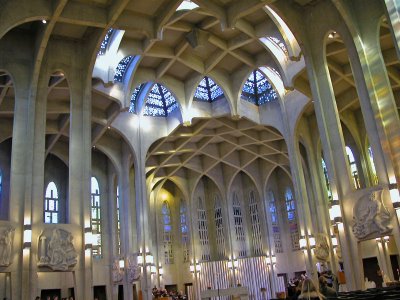
This is why the film plays to packed houses. It speaks to people about what they are. I think Mr Groening has astutely diagnosed not merely what is wrong today, with post-Christian Europe and by extension all the West, but why we are due for a terrible tribulation. One that began to unfold in the events of 9/11, and now begins to take a shape in the ludicrous battle over Danish cartoons. Emerging from a fog, our fears resolve into something we can look at. We cling to things that cannot last, out of our curious panic; to things like Porsches, and the nanny state. We ignore, in this panic, anything that isn't hard to the touch - the verities of God, nature, and our nature. Yet in so doing we select what is transient, over what is eternal.If this film ever makes it's way to a DVD store near me I shall give a look. On the weekend we attended Mass not at our local parish but at a nearby seminary school, where the service is done by Benedictine monks, seminary students and the boys attending the school. The pace was considerably slower than your average parish Mass and the setting was pretty spectacular. It was a large concrete sanctuary with a medieval feel (even if it was completed in 1982) with the sun rising through stained glass and monks' singing. It was like stepping into another planet. I think we will be doing that again. It was wonderful.

Comments